
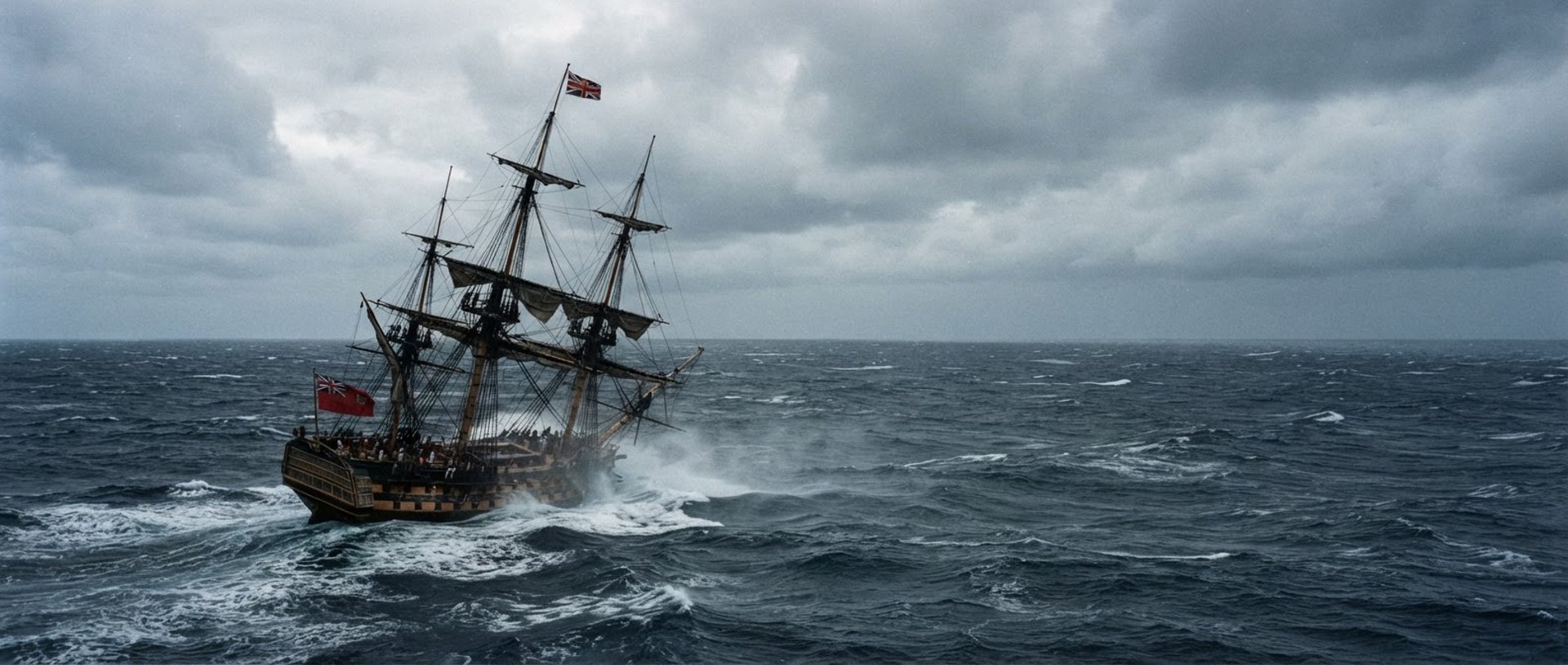
Legacy of the Royal Navy
A scholarly chronicle of British maritime command, charting tactical doctrine, vessel specifications, and sovereign supply lines from sail to the modern age.
From Oak to Cold Steel
For over four centuries, British naval supremacy was forged through rigorous Admiralty doctrine and superior vessel architecture. Our research charts this evolution, examining how tactical innovations transformed wooden walls into modern armored carrier strike groups.
We analyze the strategic decisions that secured global supply lines. By bridging historical archives with modern tactical simulation, we preserve the structural history and operational lessons of the world's most storied merchant and military fleets.
Architectural Blueprints
Our technical database archives the precise structural schematics, displacement metrics, and armament configurations that defined British naval power across successive eras.
HMS Victory (1765)
HMS Dreadnought (1906)
HMS Queen Elizabeth (2017)
A legendary 104-gun first-rate ship of the line. Serving as the ultimate expression of wooden-hulled tactical command, she anchored historic fleet actions during the age of sail.
The revolutionary battleship that rendered all prior capital ships obsolete. Featuring an all-big-gun armament and steam turbine propulsion, she redefined global naval strategy.
A 65,000-ton modern aircraft carrier representing the pinnacle of contemporary power projection. She serves as the modern shield of crucial British maritime supply lines.
The Admiral's Library
Admiralty Doctrine Texts
Precision Scale Models
Cartographic Reproductions
Authoritative volumes detailing historical tactical maneuvers, fleet orders, and strategic decisions from the age of sail.
Exquisite replica kits of historic warships, offering tactical gamers and collectors a tangible piece of naval history.
High-fidelity prints of vintage Admiralty charts, mapping historical trade routes and critical maritime choke points.
Admiralty & Logistics
Maritime history, tactical simulation, and modern supply lines.
Home-Journal-History-Gaming-Trade-Resources
Admiralty Office
editor@admiraltylogistics.co.uk
London, United Kingdom
© 2026 Admiralty & Logistics-Independent maritime analysis and tactical research.
ADMIRALTY & LOGISTICS RESEARCH